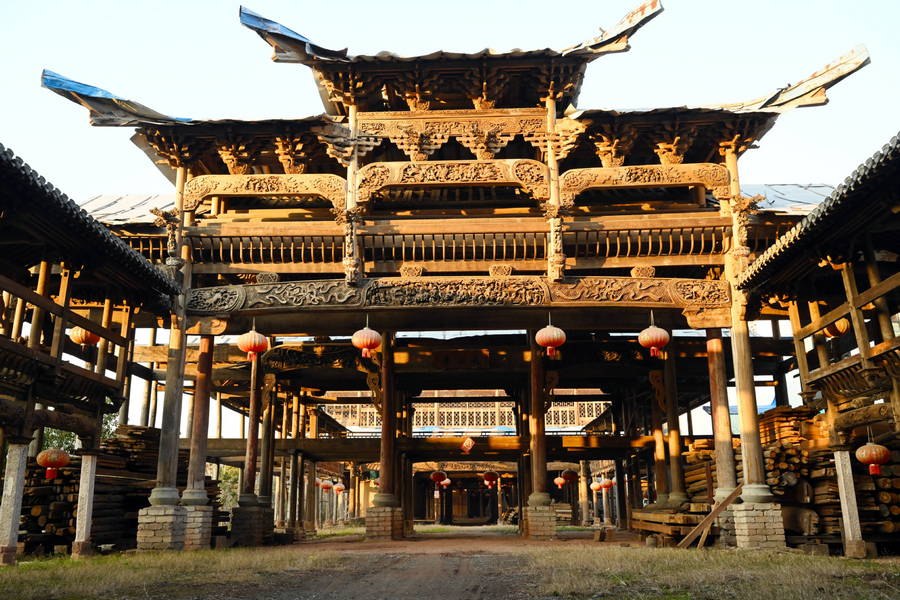
Huizhou-style Buildings
Introduction
Huizhou-style buildings are a distinctive architectural form originating from the historical Huizhou region, encompassing southern Anhui province and northern Jiangxi province in China. These buildings are characterized by their elegant design, integration with nature, and craftsmanship, particularly in wood, stone, and brick carvings (the "three carvings"). The architectural style reflects the cultural values of the region's merchant class and has become a symbol of Huizhou culture. Notable features include white walls, dark grey roof tiles, horse-head gables, and decorative elements, embodying the traditional Chinese philosophy of harmony beween humans and nature. Their unique features and cultural significance have prompted preservation efforts both in China and abroad.
History
The history of Huizhou-style buildings dates back to the Ming Dynasty (1368-1644) and flourished during the Qing Dynasty (1644-1911). This style was closely associated with the region's prosperous merchant class, who invested in residences and ancestral halls to reflect their wealth, status, and cultural values. Merchants collaborated with skilled craftspeople to create buildings with carvings that conveyed moral teachings, family traditions, and aesthetic ideals.
Huizhou merchants played a role in spreading the style beyond the region as they migrated for business. They introduced Huizhou-style elements, such as horse-head gables, to towns like Xitang in Zhejiang province, blending the style with local traditions. Over time, Huizhou-style buildings became associated with the culture of the merchant class, reflecting their emphasis on credibility, benevolence, and artistic sophistication.
Architectural Features
Structural Design
The structural design of Huizhou-style buildings is characterized by a compact layout, designed for space efficiency. These buildings often feature enclosed courtyards that allow sunlight to enter and create a sense of openness. The horse-head gables are designed to prevent fire spread and add visual interest to the roofline.
Buildings often incorporate water elements, such as canals and ponds, to enhance the connection between architecture and nature, aligning with the Chinese philosophy of harmony between humans and the environment. The use of local materials, such as old bricks, tiles, and flagstones, emphasizes the style's cultural roots.
Decorative Elements
Decorative elements are a key feature, with wood, stone, and brick carvings ("three carvings") central to their aesthetic. Wood carvings are found on windows, doors, and beams, showcasing patterns and motifs. Stone carvings are used for archways and revetments, while brick carvings adorn walls and gateways.
Each carving incorporates symbolic imagery, such as flowers, animals, and geometric patterns, to convey messages about beauty, morality, and family traditions. The craftsmanship features smooth lines and patterns that demonstrate the skill of Huizhou craftspeople.
Materials Used
Huizhou-style buildings are constructed using natural and locally sourced materials, such as wood, stone, and brick. The use of these materials aligns with the region's emphasis on sustainability. Builders often repurpose construction waste and old materials to create new structures, preserving the architecture's historical essence.
Modern restoration projects incorporate new materials and technologies to enhance the functionality of Huizhou-style buildings. Innovations in water piping, irrigation, and lighting systems are integrated into the traditional designs.
Cultural Significance
Huizhou-style buildings are cultural artifacts that embody the values, traditions, and artistic achievements of the Huizhou region. The carvings serve as a medium for storytelling, conveying messages about family heritage, moral principles, and the pursuit of beauty. These buildings reflect the tastes and aspirations of the merchant class, who sought to create functional and aesthetically pleasing spaces.
The integration of natural elements highlights the Chinese belief in the unity of humans and nature, evident in the design of courtyards, gardens, and pathways.
Huizhou-style buildings also play a role in preserving intangible cultural heritage, such as tea culture, Anhui operas, and traditional handicrafts. Exhibition areas within these buildings showcase local products and the Four Treasures of the Study, offering a glimpse into the region's culture.
Preservation and Restoration
The preservation and restoration of Huizhou-style buildings have become a priority, as many structures face challenges due to aging and neglect. Efforts to restore complexes involve negotiations with property owners and the application of traditional craftsmanship. These projects aim to extend the life of the buildings while maintaining their historical integrity.
Architects and designers have used carving elements in contemporary buildings, blending traditional aesthetics with modern functionality. Restoration projects often adhere to historical building standards, preserving the architectural language of the Ming and Qing dynasties.
Community involvement and tourism development have played a role in the preservation of Huizhou-style buildings. By transforming historical complexes into homestays and cultural attractions, stakeholders have created models for maintaining these architectural treasures.
Huizhou-style Buildings Abroad
The influence of Huizhou-style architecture has extended beyond China, with examples such as Chunhua Garden in Frankfurt, Germany. This complex incorporates carvings that showcase the skills of Huizhou craftspeople.
The artistic language of Huizhou-style carvings has inspired modern design worldwide. Designers and artists draw inspiration from the lines, patterns, and imagery of these carvings, applying them to contemporary buildings, interior decorations, and visual art.
Huizhou-style buildings reflect the legacy of traditional Chinese architecture and culture. Their features, cultural richness, and adaptability have made them a source of inspiration.








